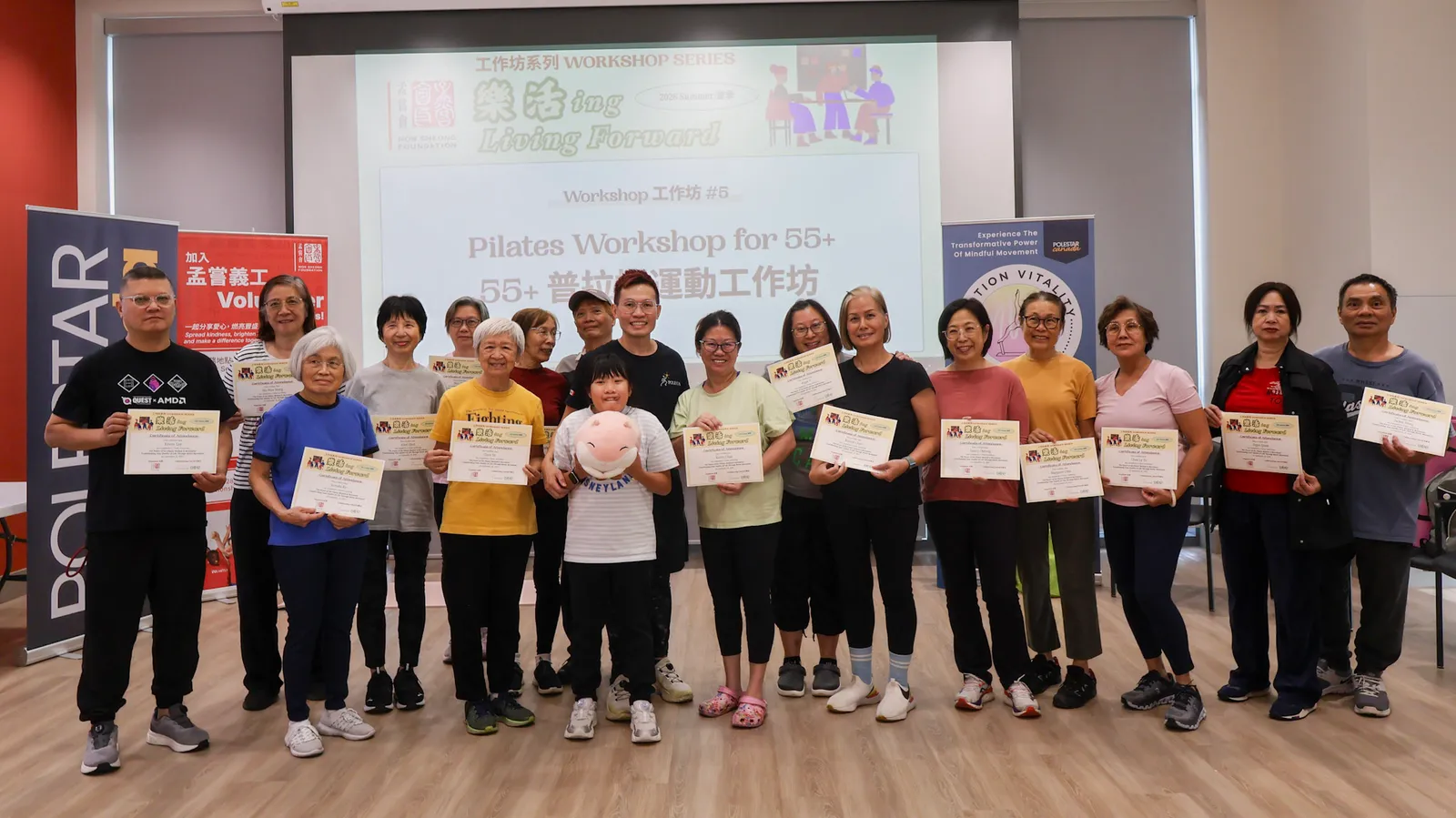
When pain, stiffness, or a loss of confidence makes movement difficult, being shown an exercise is only a starting point. My role is to help someone understand it and find a way to take part that works for their body. That was my focus during an afternoon Rehab & Movement Workshop with the Mon Sheong Foundation (opens in a new tab)’s 55+ community.
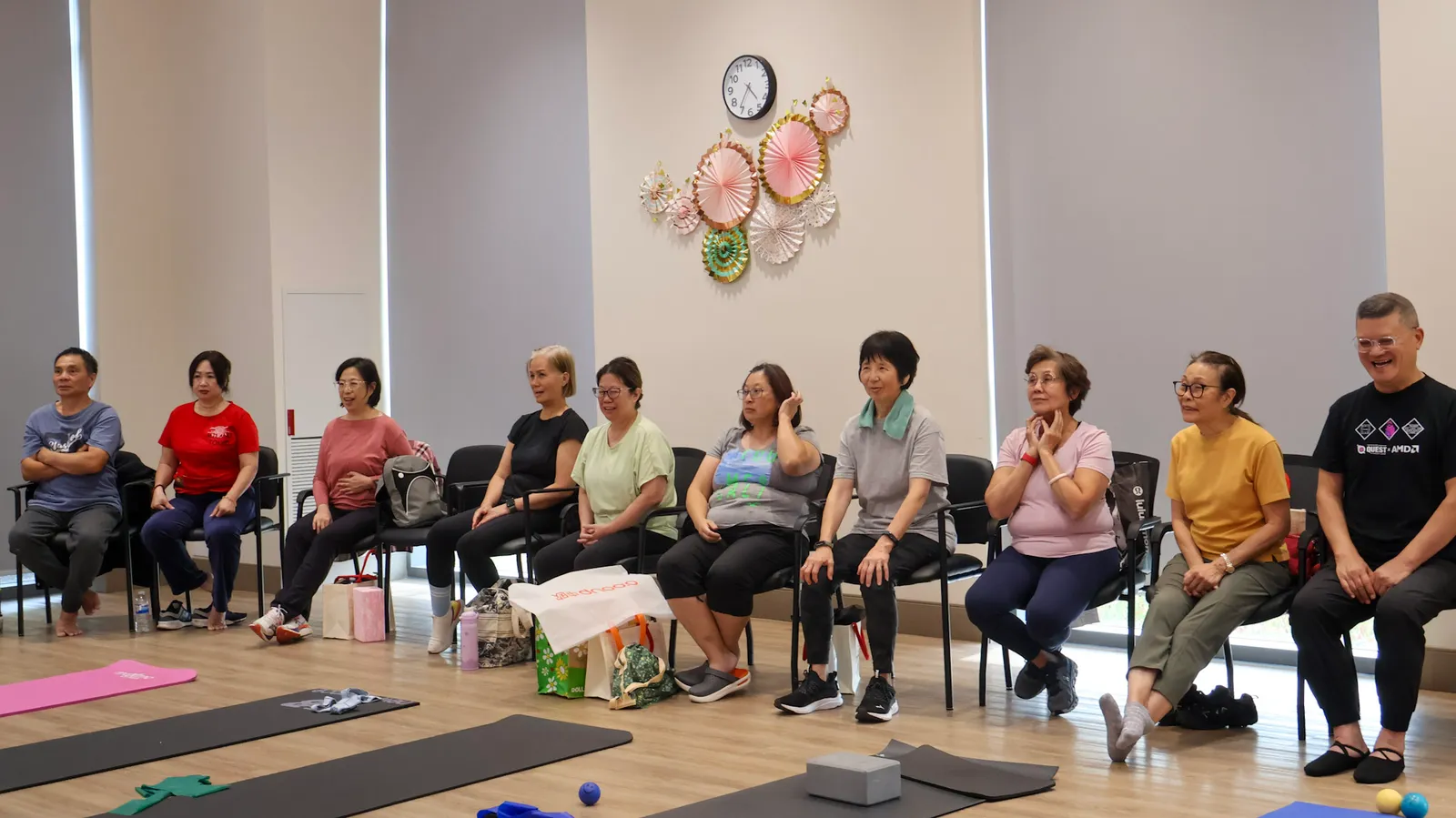
We began with the practical work. Participants brought their own mats and followed my demonstrations, with time for me to work alongside them. Later, everyone returned to their seats for explanations and breathing instruction. I offered individual guidance throughout, but the mat work was the heart of our afternoon: a chance to learn by moving, with help when it was needed.
Finding a way for each person to take part
A group of people over 55 will bring different abilities and movement concerns into the room. During the practice, some participants had difficulty following a movement or could not comfortably do it as demonstrated. That was where I needed to give more individual attention. I could explain it again, offer a tip, or help them approach the movement another way.
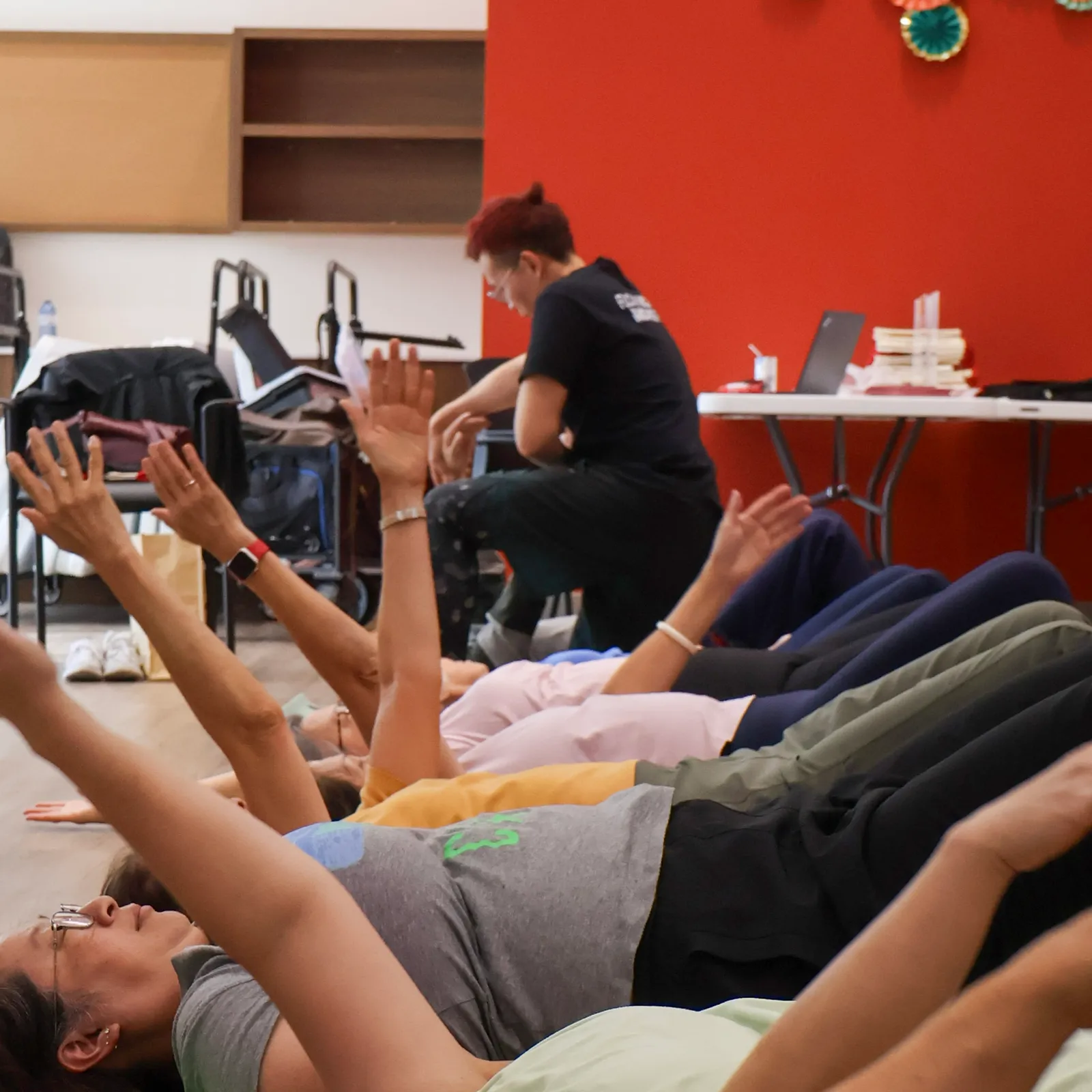
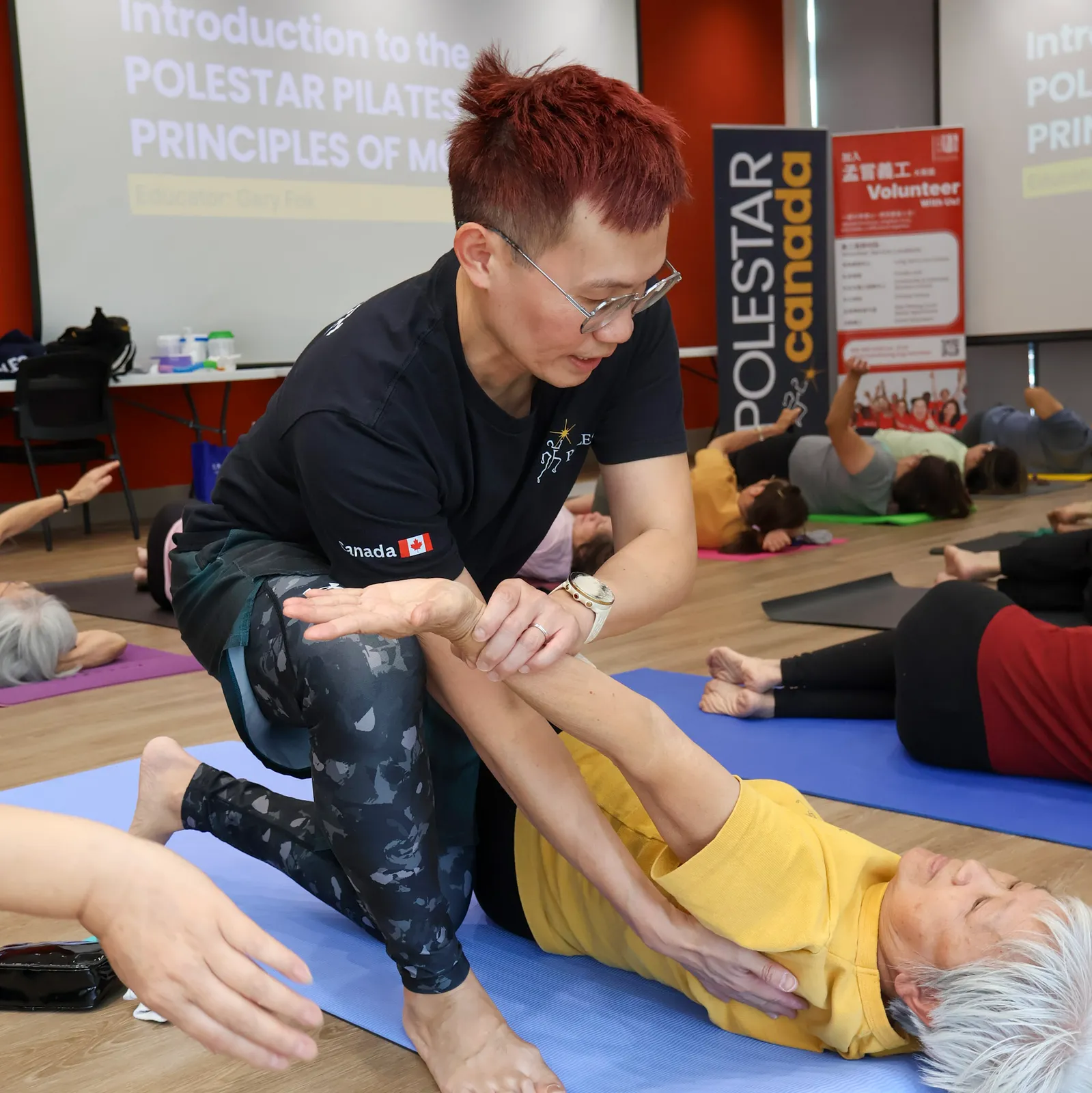
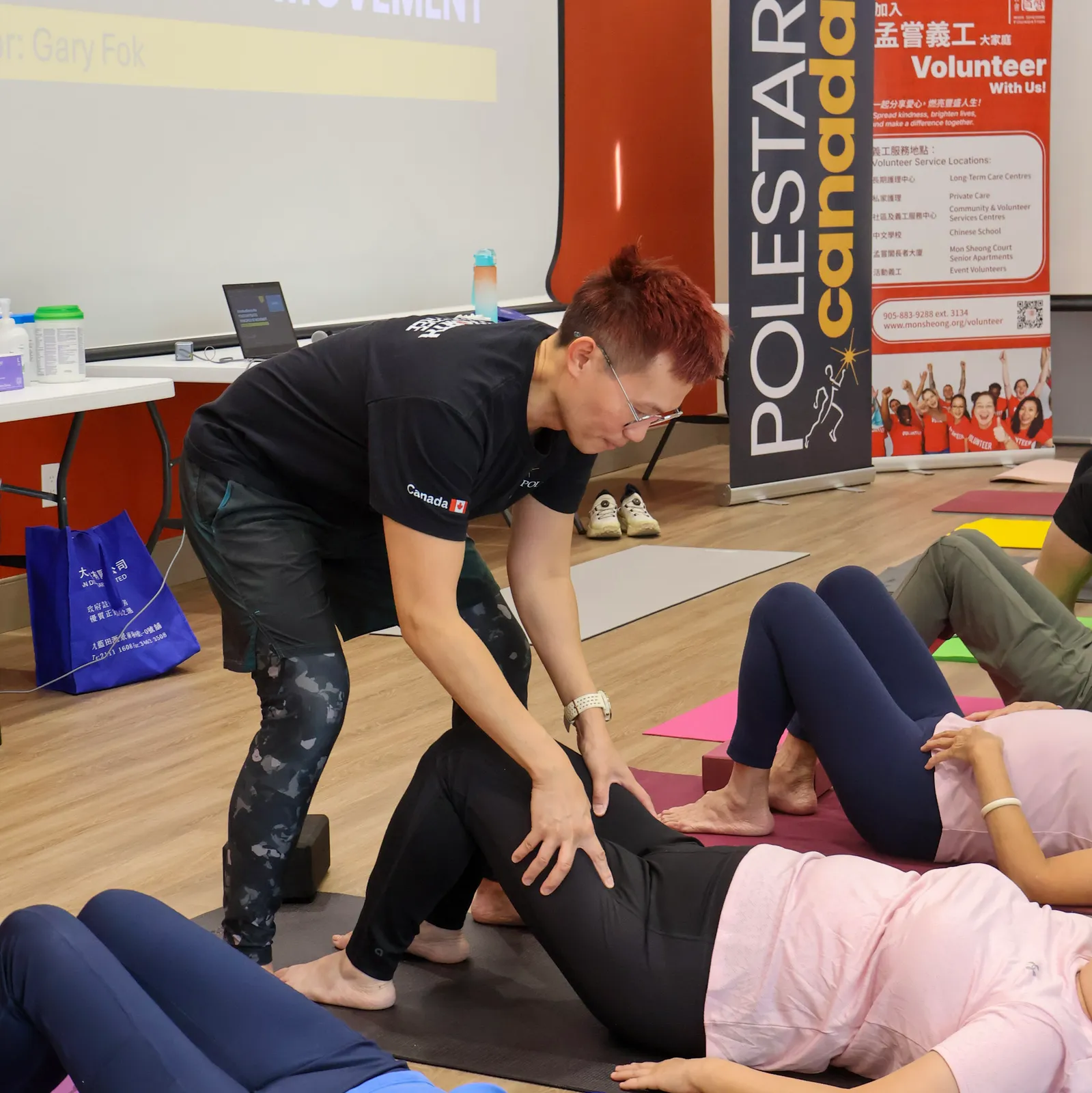
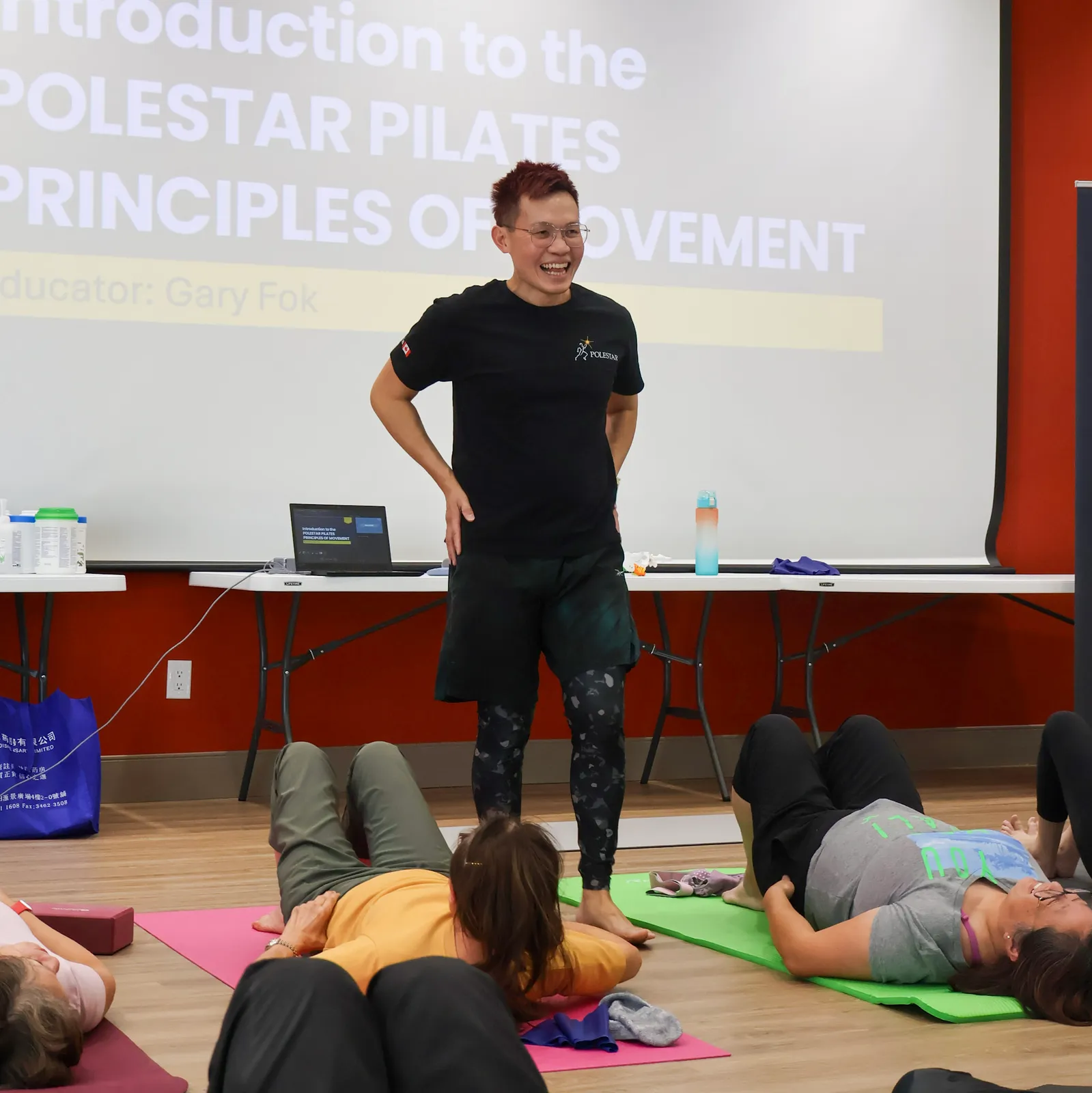
On the mats, we practised gentle core work and reaching, allowing people to work at their own pace. I moved between participants to see how they were getting on. Sometimes I supported a raised arm; at other times I guided a movement with the knees bent. Working beside someone gave me a chance to help with the part they were finding difficult, beyond what I could explain to the whole room.
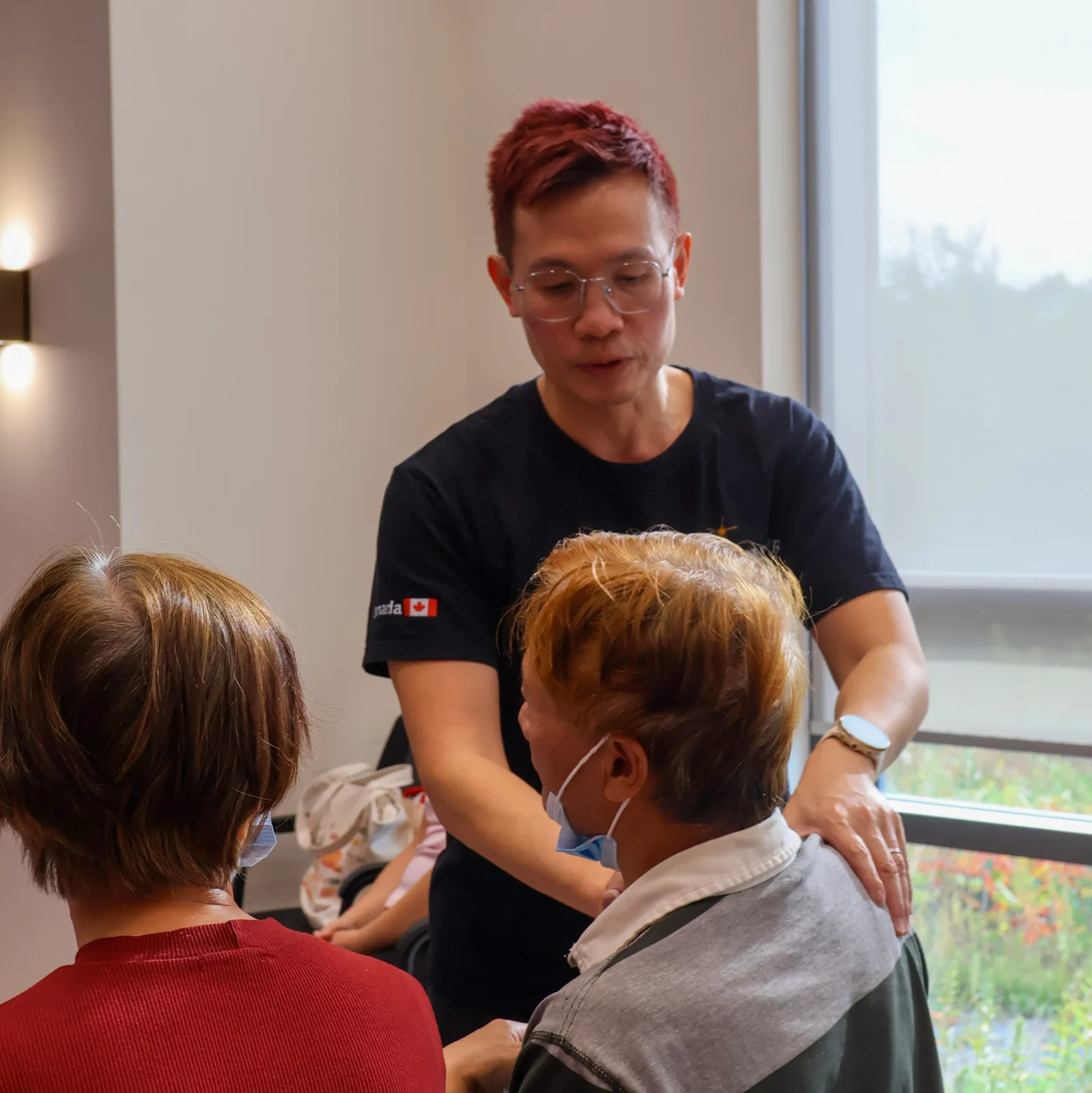
People also learn in different ways. Watching a demonstration, hearing another explanation, and receiving a hands-on cue offer different ways to understand the same movement. I used these throughout the workshop, including when working with participants while seated. The aim was to make the teaching accessible to the person in front of me.
For me, that is an important part of teaching Pilates to seniors. A movement that looks straightforward in a demonstration may feel very different to someone dealing with stiffness or discomfort. Giving them time, guidance, and another way to participate is part of the work. We can share a session while making room for those differences.
Practising for everyday movement
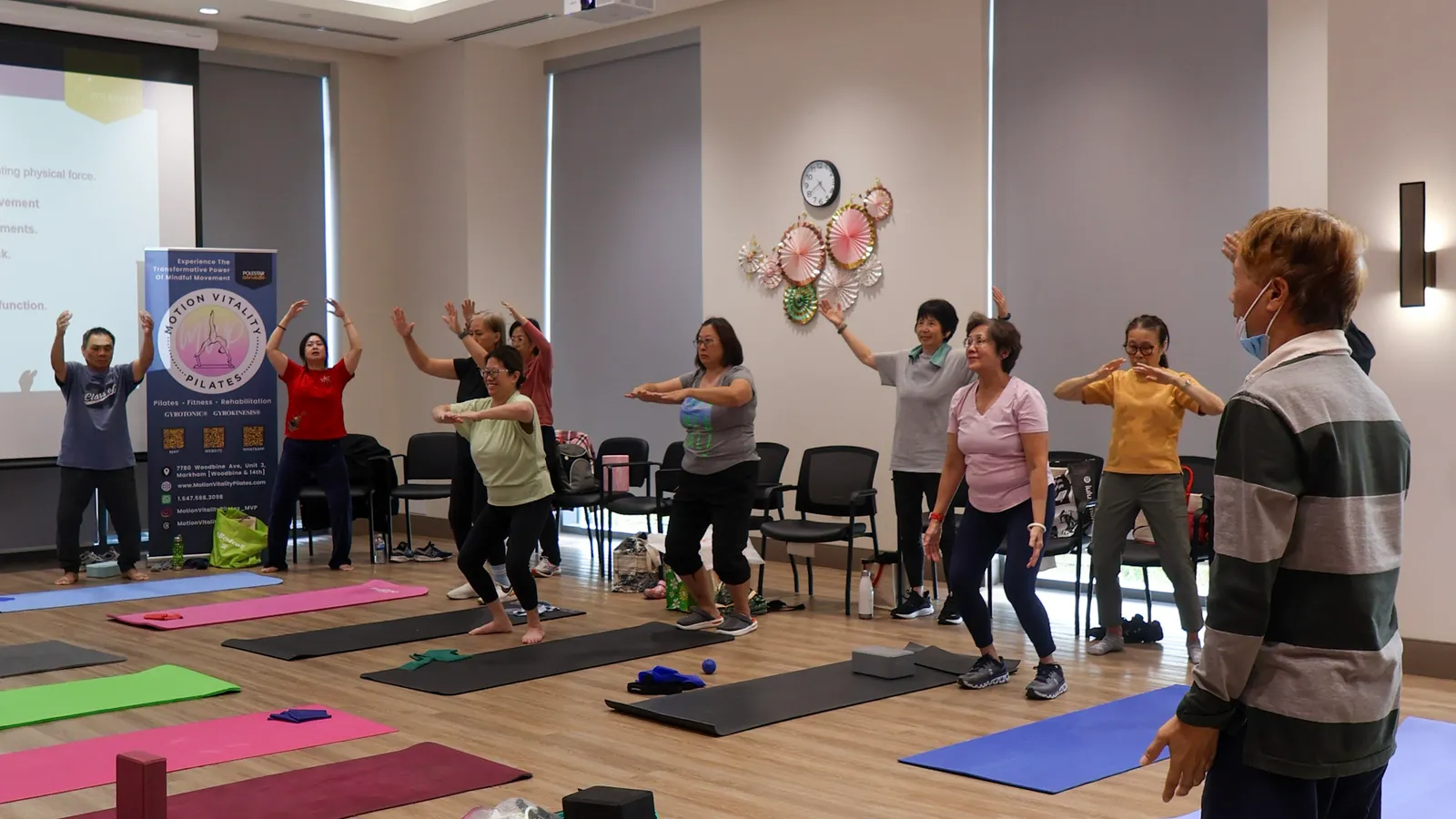
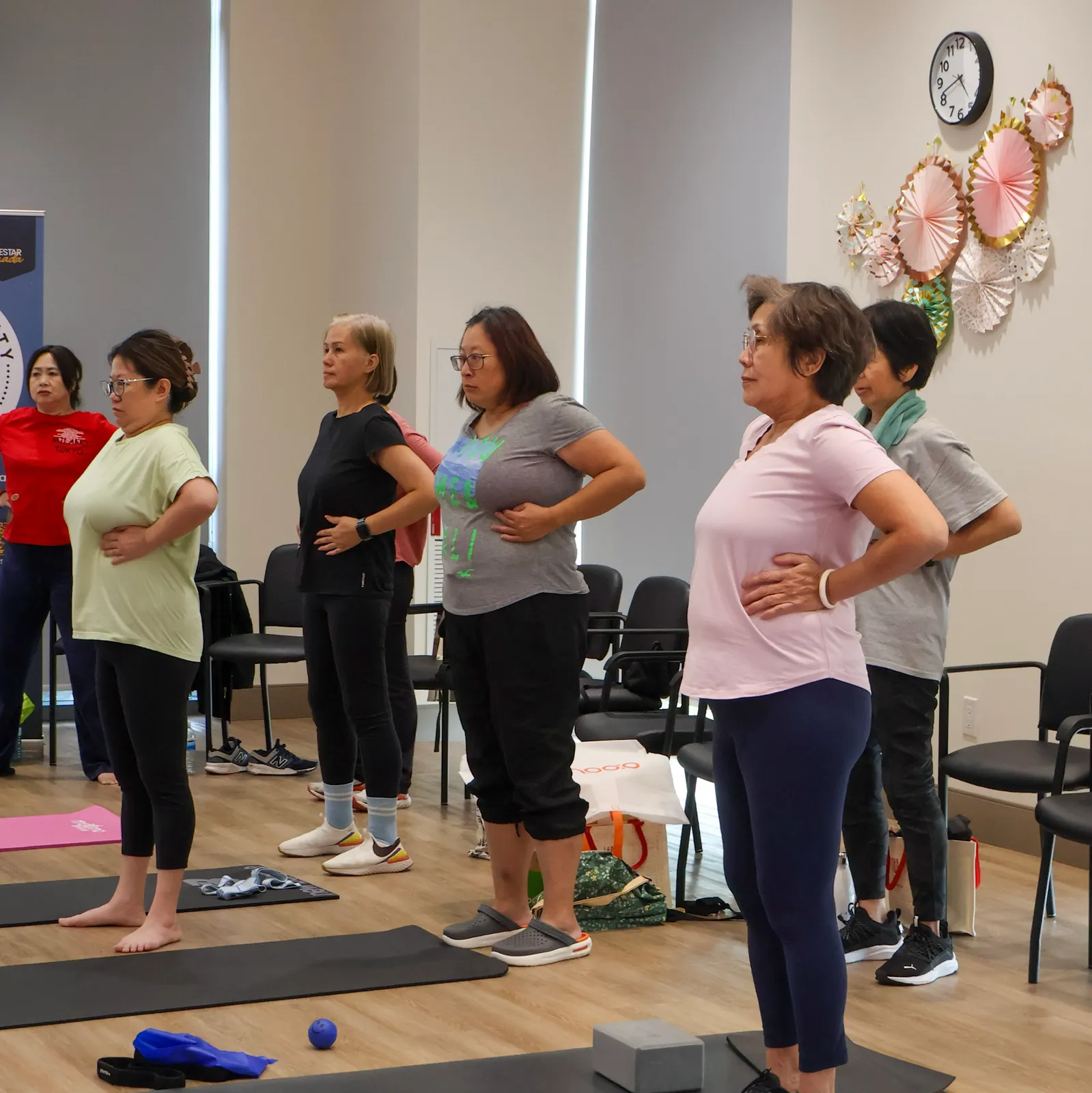
I chose activities with everyday needs in mind. Gentle core work gave us a way to practise strength at a manageable pace. We also worked on reaching, both on the mats and standing. My aim was to help participants work towards more comfortable, confident movement in actions they use beyond an exercise class, such as reaching for something above them.
Balance exercises focused on stability and feeling steadier while standing. We also practised getting down to the floor and back up. I wanted to give that transition attention in its own right. Being able to approach a change of position with more confidence is a meaningful goal, alongside the exercises done once someone is on the mat.
The smaller movements mattered too. I demonstrated work for the feet aimed at easing tension, and gentle movements involving the knees, hips, and back. These gave us time to focus on parts of the body that can make everyday movement feel difficult. Alongside strength and balance, I wanted the session to make room for comfort and mobility, with guidance suited to what each participant could manage.
Understanding what the body is doing
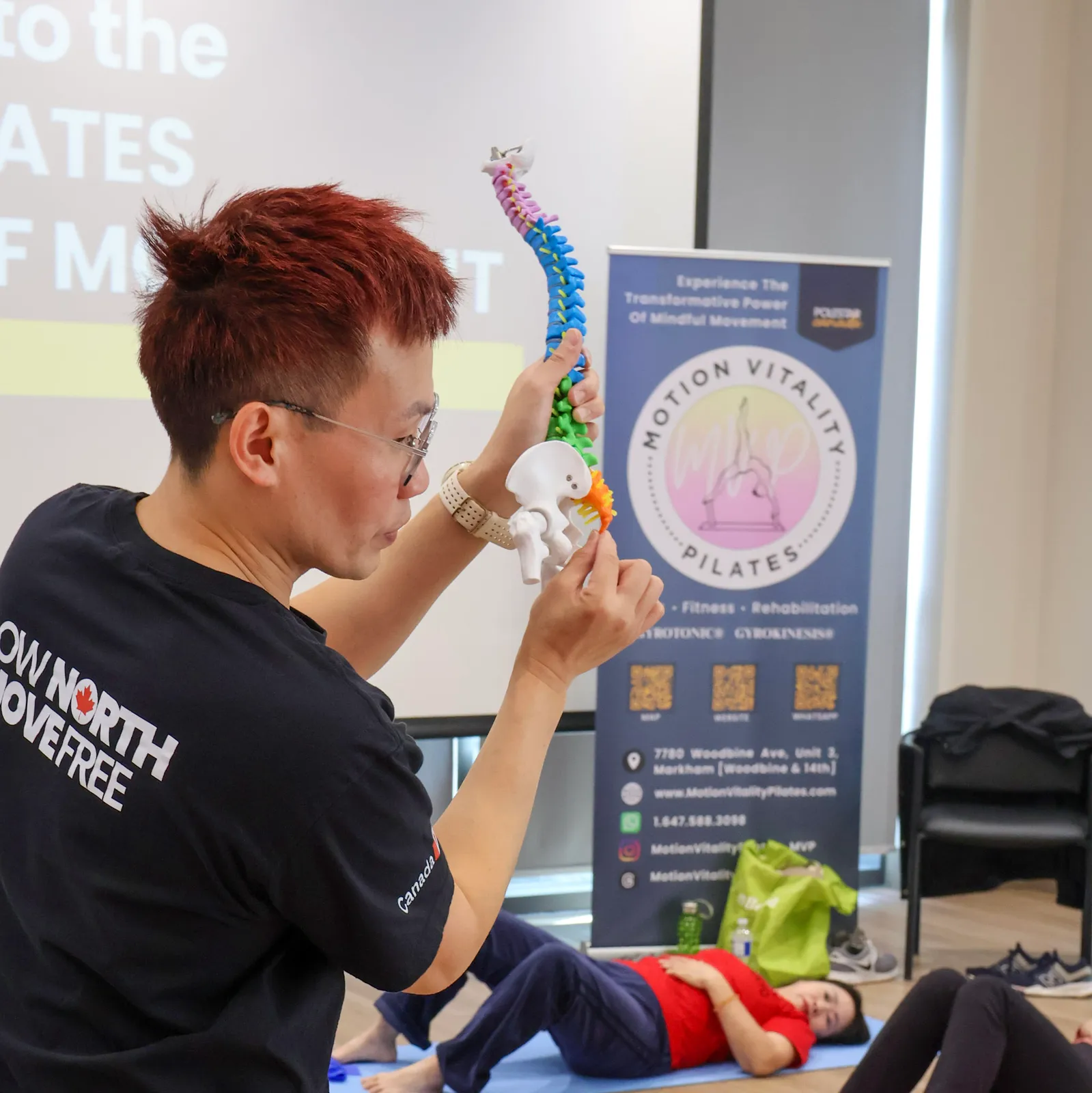
During the practical work, I used a spine model to explain how the spine is arranged and how it moves. It gave us something visible to refer to while talking about posture and alignment. I wanted participants to understand what I was asking of them, so they had more to work with than simply copying my position.
Our posture work included finding length through the spine and paying attention to alignment while standing and reaching. Easing unnecessary tension around the neck and shoulders was one of the aims. The focus was on finding a more comfortable way to organise the body during movement, with an explanation and a demonstration to help make the idea understandable.
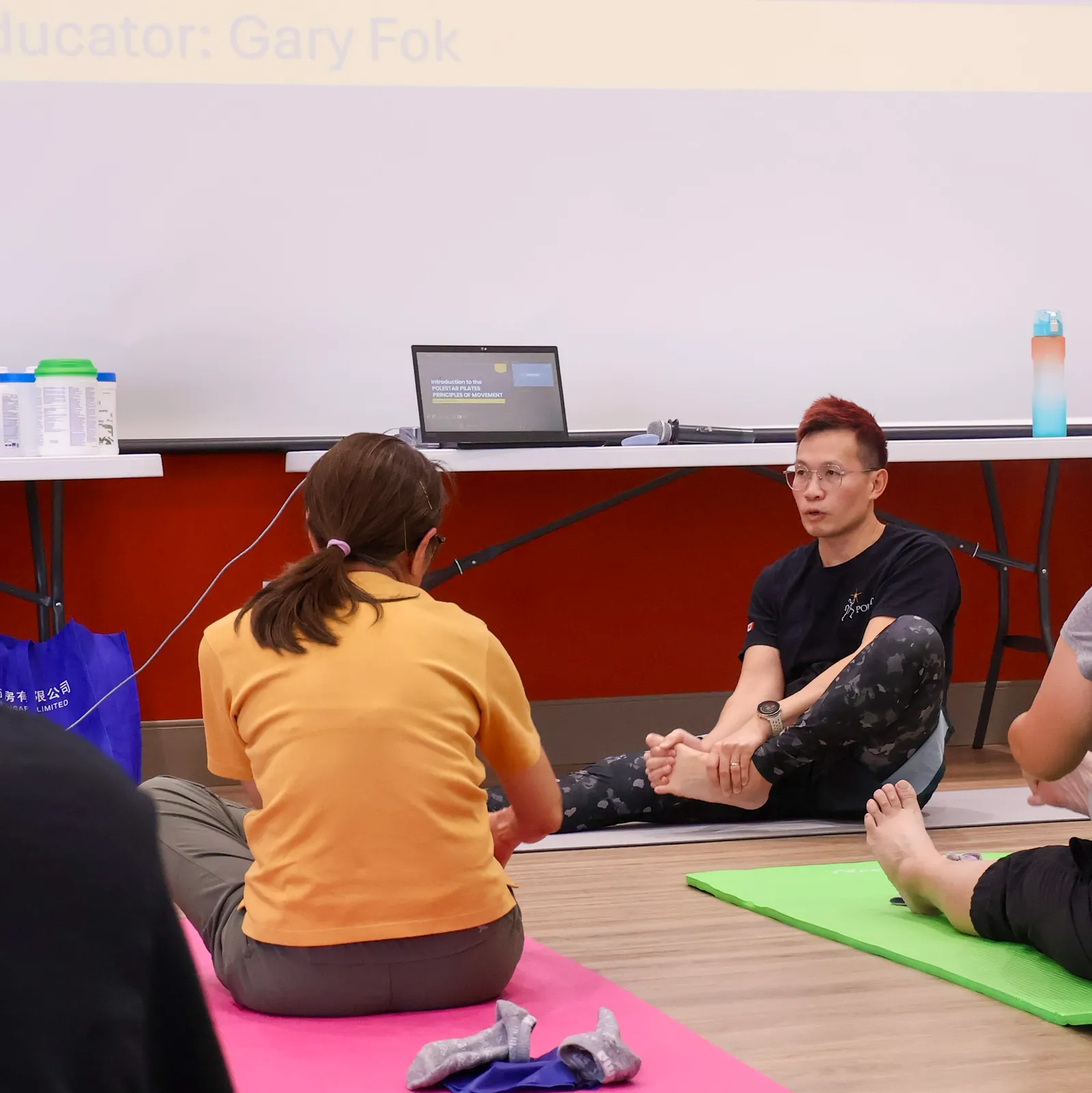
Later, with everyone back in their seats, I used slides to explain movement principles and taught a breathing method, including attention to the breath around the ribs. More comfortable breathing was another focus of the workshop. This time for explanation complemented the practical work: participants could connect what they had tried with a clearer understanding of their bodies, and ask for help along the way.
The same attention I bring to MVP
Participants asked about sore knees, stiff shoulders, and continuing to practise at home. I spent time talking with them as well as demonstrating. Those questions matter to me because they tell me what someone wants help with, and what might make movement feel less approachable in daily life.
This is the attention I bring to rehabilitation-focused Pilates at Motion Vitality Pilates in Markham. Whether someone is returning to movement after an injury, managing stiffness, or working on strength and balance as they get older, I want to understand their starting point. My own experience of recovering from injuries has shaped that interest in helping people feel more capable through movement.
The Mon Sheong group was a community of older adults, but this approach matters across ages and abilities. At MVP, our senior programmes and individual sessions offer different settings for that work. I want people to have space to learn, ask questions, and work towards their movement goals with attentive teaching.
Thank you, Mon Sheong
Thank you to the Mon Sheong Foundation (opens in a new tab) team for inviting me, and to every member who brought a mat, joined the practice, and shared their questions. There was concentration, conversation, and laughter throughout the afternoon. I am grateful for the opportunity to share this work with your community and to spend time learning together.